Public social platforms
Follow monitored public conversation across X, Instagram, TikTok, Facebook, LinkedIn, Snapchat and Reddit.
Public intelligence for government teams
When a service fails, a policy lands badly, or a false narrative takes hold, the public record forms quickly. Socialhose helps public affairs, communications, and constituent-service teams see the shift, understand who is carrying it, and brief from evidence.










Follow monitored public conversation across X, Instagram, TikTok, Facebook, LinkedIn, Snapchat and Reddit.
Separate local and multilingual conversation without flattening every community into one aggregate.
Move from volume to sentiment, emotion, entities, location, risk, intent, and stakeholder-ready context.
See what the public needs from you
See how people experience a service, interpret a policy, and carry an issue before the formal feedback cycle catches up.
Track monitored conversation about outages, access, eligibility, locations, wait times, and frontline experience. Group Mentions by issue, place, intent, and sentiment so an operations problem does not arrive disguised as a reputation problem.
Compare the language of the announcement with the language the public, advocates, and institutions use in response. Follow the themes and entities that gain traction as the conversation develops.
Use volume, sentiment, emotion, and anomaly signals to surface monitored conversation that deserves human review. Alerts and digests keep the right team close to the source rather than reacting to a screenshot without context.
Filter by language, inferred location, platform, topic, and time. Give local context room to remain local while leadership keeps one shared view of the wider issue.
A common briefing, not another silo
A repeatable workflow for communications, public affairs, constituent services, and leadership.
Built for accountable public communication
Social listening is useful when it changes the quality of the next briefing, response, and service decision.
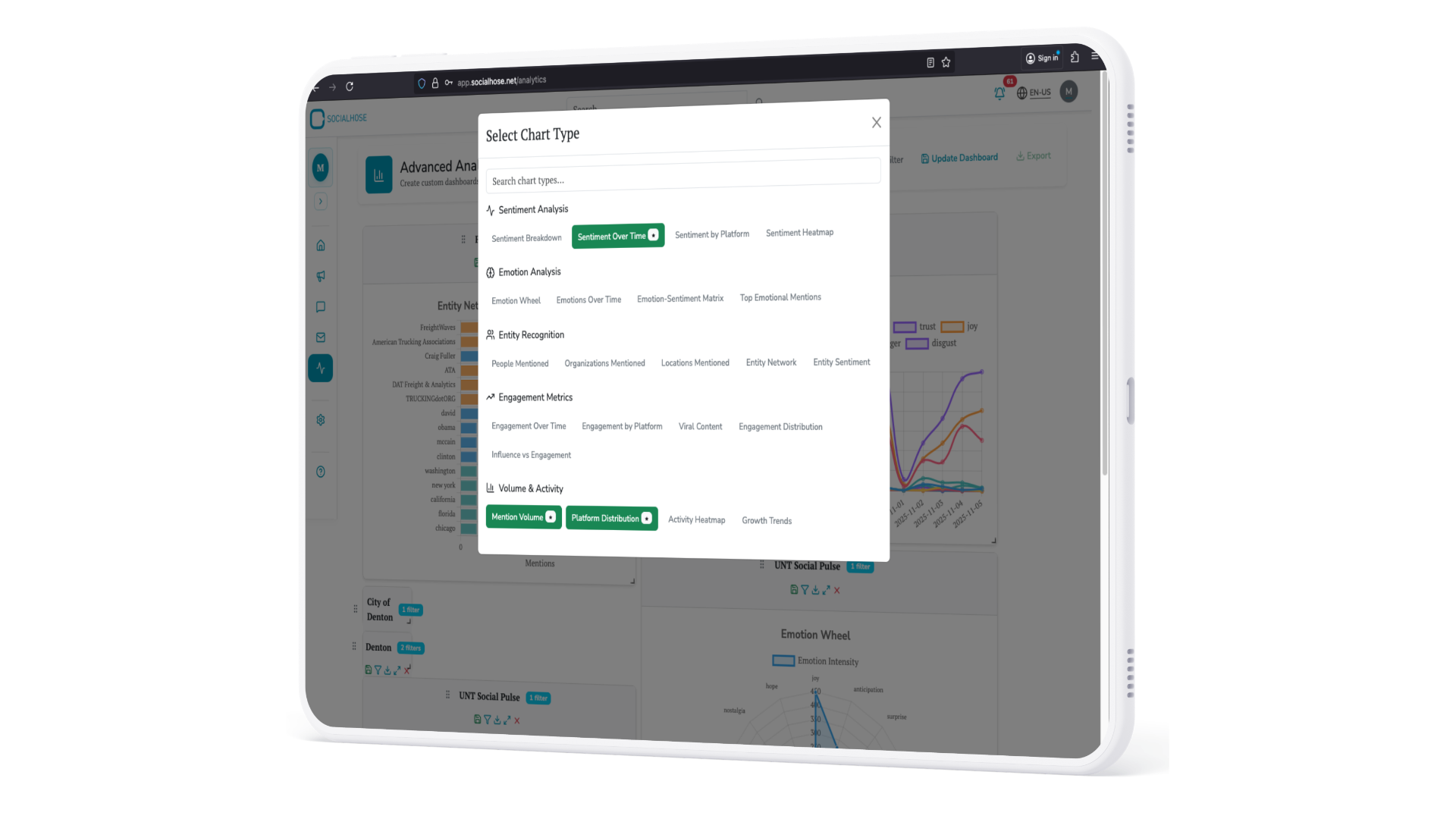

See which policy frames are taking hold, which stakeholders are carrying them, and where the public explanation is losing clarity.

Bring recurring service questions and access friction into operational conversations while the pattern is still visible at source level.

Maintain a common evidence base as volume, emotion, and narrative change. Brief from what is happening, not from the loudest repost.

Turn the live conversation into scheduled summaries, exports, and API-fed reporting for decision-makers and stakeholders.
Original research from the platform
The Sudan Conversation Report (Edition 01) coded 1,179 events from public posts, April through June 2026, and measured the Framing Gap: the distance between how violence is narrated and where the harm actually lands. Every figure comes from the same Socialhose feed a public-sector team would use.
Narrative named civilians as targets in 18% of violence. The impact reading put civilian exposure at 71%.
The share of civilian-directed violence whose own framing never names civilians as its object.
Of coded conflict events, nearly three-quarters were material violence, not verbal escalation.
Published by Social Knowing, our independent research journal. Figures from the Sudan Conversation Report (Edition 01) derive from the Socialhose Public API and are frozen at publication; the live Sudan Watch board carries the current reading.
Questions public-sector teams ask first
Brief from the conversation as it is
Give communications, constituent services, and leadership a shared view of public concern while the context is still useful.